
Introduction to Baked Cheesecake
There’s something magical about a slice of baked cheesecake. The creamy texture, the buttery crust, and that delightful tang from the soured cream—it’s a dessert that feels like a warm hug. Whether you’re looking to impress guests or simply treat yourself after a long day, this baked cheesecake is the answer. It’s surprisingly easy to whip up, making it perfect for busy weeknights or special occasions. Trust me, once you take that first bite, you’ll understand why this recipe has a special place in my heart.
Why You’ll Love This Baked Cheesecake
This baked cheesecake is a game-changer in the dessert world. It’s not just about the taste—though, let’s be honest, it’s heavenly. The ease of preparation means you can have a stunning dessert ready without spending hours in the kitchen. Plus, the creamy filling paired with that crunchy biscuit base creates a delightful contrast. It’s a crowd-pleaser that will have everyone asking for seconds, making it perfect for any gathering.
Ingredients for Baked Cheesecake
Gathering the right ingredients is the first step to creating a delicious baked cheesecake. Here’s what you’ll need:
- Unsalted butter: This adds richness to the crust. You can use salted butter if that’s what you have on hand, but it may alter the flavor slightly.
- Digestive biscuits: These form the base of your cheesecake. If you can’t find them, graham crackers work just as well for that crunchy texture.
- Egg white: This helps seal the crust, keeping it from getting soggy. You can skip it if you’re in a pinch, but it does help with texture.
- Full-fat soft cheese: The star of the show! It gives the cheesecake its creamy consistency. Make sure it’s at room temperature for easy mixing.
- Soured cream: This adds a tangy flavor and smoothness to the filling. Greek yogurt can be a good substitute if you’re looking for a healthier option.
- Cornflour: This thickens the filling and helps it set perfectly. If you’re gluten-free, you can use cornstarch instead.
- Caster sugar: This fine sugar dissolves easily, ensuring a smooth filling. Granulated sugar can be used, but it may leave a slightly grainy texture.
- Vanilla extract: A splash of this adds depth to the flavor. If you have vanilla bean paste, it’s even better!
- Large eggs: These provide structure and richness. Make sure they’re at room temperature for the best results.
- Soured cream (for topping): This creamy layer on top adds a delightful finish. You can mix in a bit of sugar and lemon juice for extra flavor.
- Caster sugar (for topping): Just a sprinkle to sweeten the topping. You can adjust the amount based on your taste.
- Lemon juice: A touch of acidity brightens the flavors. Fresh lemon juice is best, but bottled works in a pinch.
For exact measurements, check the bottom of the article where you can find everything listed for easy printing.
How to Make Baked Cheesecake
Step 1: Preheat and Prepare
Start by preheating your oven to gas 4, 180°C, or fan 160°C. This ensures your cheesecake bakes evenly. While the oven warms up, grab a 20cm springform cake tin and grease the base and sides with a bit of unsalted butter. This step is crucial; it helps the cheesecake release easily later. Place a baking tray on the middle shelf to catch any drips, keeping your oven clean.
Step 2: Make the Biscuit Base
In a small saucepan, melt the unsalted butter over medium-low heat. Meanwhile, toss the digestive biscuits into a food processor and blitz them into fine crumbs. Once the butter is melted, pour it over the biscuit crumbs and pulse until they’re well coated. This buttery mixture will form the base of your cheesecake, giving it that delightful crunch. It’s a simple yet essential step for a perfect baked cheesecake.
Step 3: Bake the Base
Press the buttery biscuit mixture firmly into the bottom of your prepared tin. Make sure it’s compact and even. Bake this base in the preheated oven for about 20 minutes, or until it turns golden brown. This step is vital; it creates a sturdy foundation for your cheesecake. Once baked, set it aside to cool while you prepare the filling.
Step 4: Prepare the Filling
In a large mixing bowl, beat the full-fat soft cheese until it’s smooth and creamy. Gradually add the soured cream, cornflour, caster sugar, and vanilla extract, mixing gently to combine. This is where the magic happens! Once everything is well blended, slowly add the beaten eggs, mixing until just combined. Be careful not to overmix; you want a smooth filling without incorporating too much air.
Step 5: Bake the Cheesecake
Pour the creamy filling over the cooled biscuit base, leveling the top with a spatula. Now, it’s time to bake! Place the cheesecake in the oven and bake for about 1½ hours. You’re looking for a slight wobble in the center when it’s done. This indicates it’s set but still creamy. Once baked, turn off the oven and let the cheesecake cool completely inside. This helps prevent cracks.
Step 6: Cool and Top
After the cheesecake has cooled, prepare the topping. In a bowl, mix the soured cream, caster sugar, and lemon juice until smooth. Spread this mixture evenly over the cooled cheesecake. Cover it with foil and chill in the fridge for at least 8 hours, or overnight if you can wait! This chilling time enhances the flavors and texture, making every bite a delight.
Tips for Success
- Always use room temperature ingredients for a smoother batter.
- Don’t skip the chilling time; it’s essential for flavor and texture.
- Use a palette knife to gently release the cheesecake from the tin, preventing cracks.
- For a richer flavor, consider adding a pinch of salt to the filling.
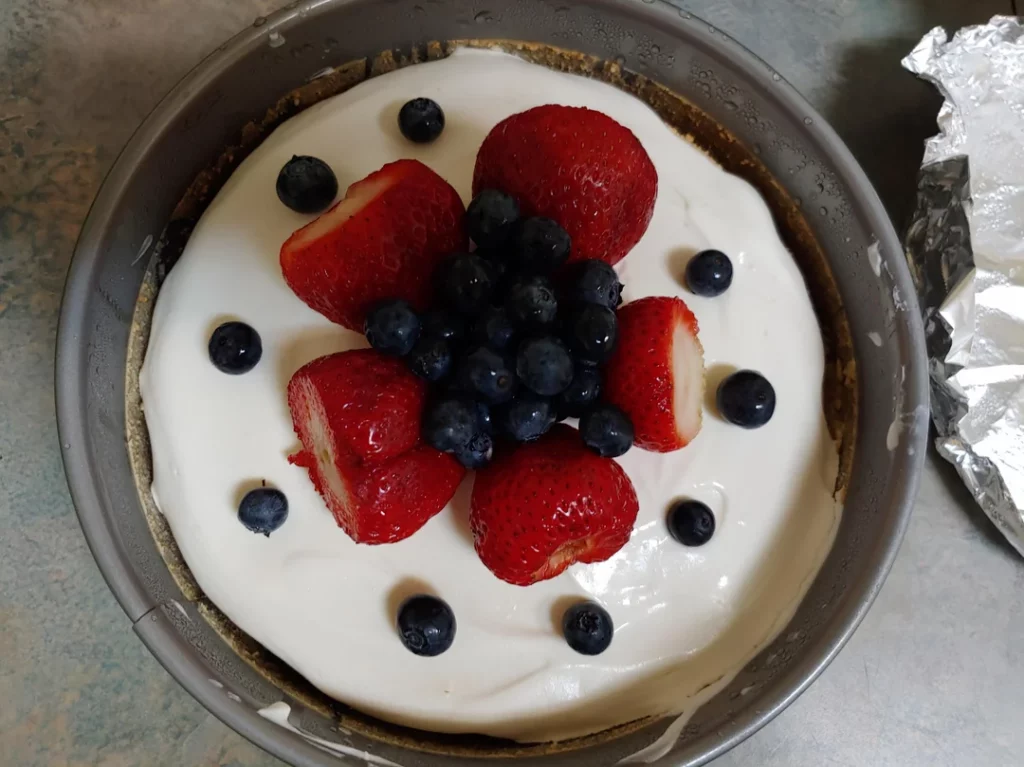
- Experiment with toppings like fresh fruit or chocolate for a fun twist!
Equipment Needed
- 20cm springform cake tin: Essential for easy removal. A regular cake tin works, but it may be trickier to serve.
- Food processor: Perfect for crushing biscuits. A ziplock bag and rolling pin can work in a pinch.
- Mixing bowls: Use a large bowl for the filling. Any sturdy bowl will do.
- Spatula: Great for leveling the filling. A wooden spoon can also work.
- Palette knife: Ideal for releasing the cheesecake. A butter knife can serve as an alternative.
Variations
- Chocolate Baked Cheesecake: Add melted dark chocolate to the filling for a rich, indulgent twist.
- Fruit Swirl: Incorporate a fruit puree, like raspberry or strawberry, into the filling before baking for a fruity flavor.
- Gluten-Free Option: Substitute digestive biscuits with gluten-free cookies or almond flour for the crust.
- Vegan Version: Use a plant-based cream cheese and replace eggs with flaxseed meal mixed with water for binding.
- Citrus Zest: Add lemon or orange zest to the filling for a refreshing citrus kick.
Serving Suggestions
- Pair your baked cheesecake with a dollop of whipped cream for added richness.
- Fresh berries, like strawberries or blueberries, add a pop of color and flavor.
- Serve with a drizzle of chocolate or caramel sauce for a decadent touch.
- A cup of coffee or tea complements the cheesecake beautifully.
- For presentation, garnish with mint leaves for a fresh look.
FAQs about Baked Cheesecake
Can I make baked cheesecake ahead of time?
Absolutely! In fact, making it a day in advance is often recommended. The flavors deepen as it chills overnight, making it even more delicious. Just remember to cover it well to keep it fresh.
Why is my baked cheesecake cracking?
Cracks can happen for a few reasons. Overmixing the batter can incorporate too much air, leading to cracks as it bakes. Also, cooling it too quickly can cause the surface to crack. Let it cool gradually in the oven after baking.
Can I freeze baked cheesecake?
Yes, you can freeze baked cheesecake! Just make sure it’s completely cooled and wrapped tightly in plastic wrap and foil. It can last up to three months in the freezer. Thaw it in the fridge before serving.
What can I use instead of sour cream?
If you don’t have sour cream, Greek yogurt is a great substitute. It offers a similar tangy flavor and creamy texture. You can also use crème fraîche if you have it on hand.
How do I know when my baked cheesecake is done?
The cheesecake is done when the edges are set, but the center still has a slight wobble. It will continue to firm up as it cools. A toothpick inserted should come out mostly clean, but a little filling is okay.
Final Thoughts
Creating this baked cheesecake is more than just following a recipe; it’s about crafting a moment of joy. Each step, from mixing the creamy filling to watching it rise in the oven, brings a sense of accomplishment. The first slice reveals that perfect blend of flavors and textures, making every effort worthwhile. Whether you’re sharing it with friends or savoring it solo, this cheesecake is bound to create lasting memories. So, roll up your sleeves, embrace the process, and enjoy the delicious rewards. Trust me, your taste buds will thank you for this delightful experience!
Get access to this and other recipe cards - free!
✓ Free membership — no credit card required